
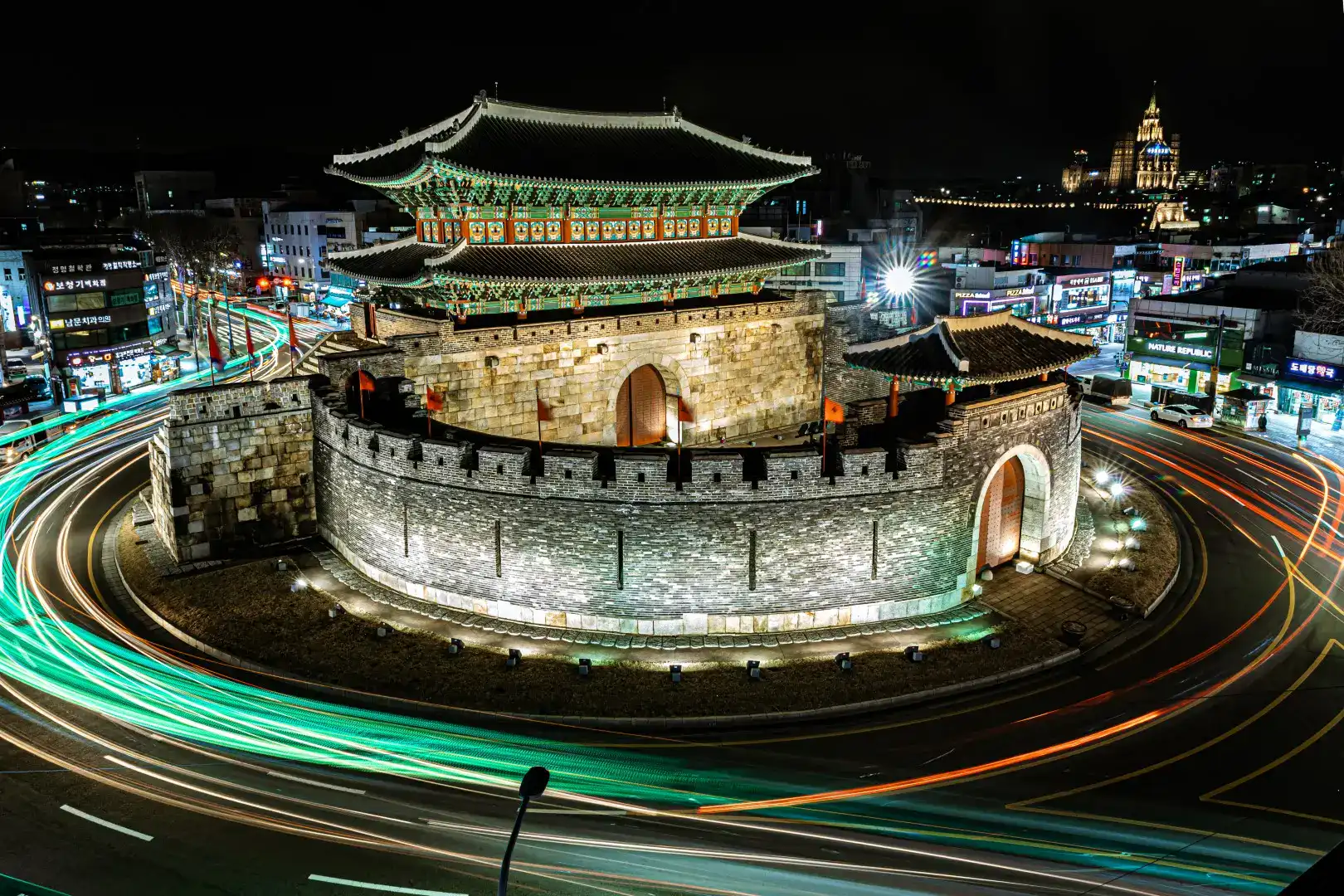
The Paldalmun Gate, located in Suwon, South Korea, is much more than a simple entrance. Known as "a door that opens to a path that leads to all directions," this historical structure is a symbol of connection and possibility. Built during the Joseon dynasty, Paldalmun served not only as a strategic defense, but also as a meeting point for traders and travelers from all over the world.
A curious fact about Paldalmun is that it is separated from the rest of the Hwaseong Fortress and is in the middle of a bustling intersection. This is because trade was already rooted in the place before its construction, which made it impossible to fully integrate it with the walls of the fortress. In addition, the door is protected by a structure called 'ongseong', a secondary defensive wall designed to prevent the main door from being knocked down with logs.
Paldalmun Gate is a cultural treasure designated as National Treasury number 402. It is the largest and most spectacular of the doors of the Hwaseong Fortress, and is highly valued for its architecture that incorporates several styles of the fortified doors of the Joseon Dynasty. This door is not only a testimony to the advanced engineering and architecture of its time, but also a symbol of Korea's rich history and culture.
Today, the Paldalmun Gate remains a vibrant and life-filled place. Surrounded by bustling markets and streets full of history, this door invites visitors to explore and discover. Whether you are looking to immerse yourself in the rich Korean culture, enjoy local cuisine or simply walk around it, Paldalmun offers a unique experience that connects the past with the present.
Visiting the Paldalmun Gate is like opening a window to the heart of Korea. Each stone and each bow tell stories of ancient times, while the modern environment reminds you that you are in a place where tradition and modernity coexist harmoniously. So, the next time you're in Suwon, don't forget to pass by Paldalmun and let you go along the roads that open in all directions.
Generated by IA and cured by CICHC

